

How To Choose The Right Meal Prep Food Scales 2026
If you are serious about meal prepping, you already know that eyeballing portions is the fastest way to sabotage your progress. Whether you are hitting a specific protein target for muscle gain or just trying to keep your calorie budget in check, a kitchen scale is non-negotiable. But not all scales are built for the chaos of a Sunday meal prep session. Some are fragile, some have tiny platforms that can’t handle a quart container, and some lose their calibration the moment they get splashed. I have tested enough of these gadgets to know that buying the wrong one means wasting time and money on a tool that ends up buried in a drawer.
Our Top Picks
Affiliate disclosure: if you buy through these links, we may earn a commission at no extra cost to you.

Table of Contents

Quick Answer
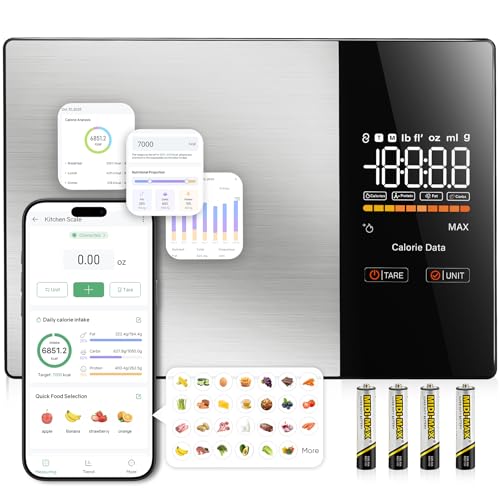
Choose a digital kitchen scale with a platform at least 6x6 inches, a capacity of 11 pounds (5kg), and a stainless steel or easy-wipe surface. Look for "tare" functionality that actually resets to zero instantly, and avoid glass platforms if you are dropping heavy cast iron or dense meat packs. For meal prep specifically, prioritize durability and ease of cleaning over sleek aesthetics.
Platform Size Matters More Than You Think
Most standard kitchen scales come with a tiny platform, maybe 5 or 6 inches across. That is fine for weighing a stick of butter or a single avocado. It is terrible for weighing a full quart container of chicken and rice. If your scale platform is smaller than your container, you are playing a dangerous game of balance. One bump, one uneven counter, and your entire prep session ends with a spill.
Look for a scale with a platform that is at least 6x6 inches, but ideally 7x7 inches or larger. This gives you enough room to seat your containers securely without overhanging the edges. When you are weighing out 5 pounds of ground beef into five separate bags, that extra inch of stability saves you from frustration. I also recommend checking the shape. Square platforms are generally more stable than round ones for bulky containers like Tupperware or glass meal prep jars.
Capacity and Precision: The 11-Pound Sweet Spot
You do not need a industrial butcher scale that handles 100 pounds. You need a scale that handles your largest batch without maxing out. The standard 11-pound (5kg) capacity is the perfect middle ground. It is heavy enough to weigh a large bowl of dough or a family-sized portion of pasta, but light enough to keep the sensor sensitive for smaller items like spices or herbs.
Precision is where cheap scales fail. You want a scale that measures in 1-gram increments. If you are tracking macros, knowing that your almond butter is 15 grams instead of "about 15 grams" makes a real difference over a week. Avoid scales that only measure in ounces or 5-gram increments unless you are strictly cooking by volume equivalents. Grams are universal, and they work with every nutrition app you will use.
The Tare Function: Your Best Friend for Batch Cooking
The tare function zeros out the weight of your container. This is the single most important feature for meal prep. Without it, you are doing mental math every time you add an ingredient, which leads to errors. A good tare function should reset instantly when you press the button. If there is a lag, you will lose your rhythm during fast-paced batch cooking.
Look for a scale that allows multiple tares. Sometimes you will weigh your container, tare it, add chicken, tare it again, then add sauce. If the scale only allows one tare per session, you will have to manually subtract weights, which is slow and prone to mistake. The best scales let you tare as many times as you want within a single power cycle.
Material and Cleaning: Avoid the Crumb Traps
Meal prep is messy. You will spill juice, splash oil, and drop bits of onion. A scale with a textured plastic surface or deep seams is a nightmare to clean. Crumbs get stuck in the corners, and bacteria loves those hidden spots. For a tool you use weekly, choose a scale with a smooth, flat surface. Stainless steel is ideal because it wipes clean instantly and does not stain. High-quality ABS plastic is also good if it is completely seamless.
Avoid glass platforms if you are dropping heavy items like cast iron skillets or dense meat packs. Glass can shatter under impact, and scratches on glass harbor bacteria. If you prefer the look of glass, make sure it is tempered and treat it with care. For pure utility, a single-piece stainless steel or smooth plastic top is the most durable option. You should be able to wipe it down with a disinfectant spray without worrying about damage.
Power Source: Battery vs. USB Rechargeable
Nothing is more annoying than needing a scale and realizing the batteries are dead. USB-rechargeable scales are becoming the standard for a reason. You can charge it on the same cable as your phone or tablet, and you never have to buy AAA or AA batteries again. This is especially useful if you travel or have a busy kitchen where you might forget to keep spare batteries on hand.
If you prefer batteries, look for a scale with a low-battery indicator that gives you plenty of warning. There is nothing worse than a scale dying in the middle of weighing your last container. USB scales often have longer battery lives because they use more efficient internal cells, but always check the estimated hours of use. For a weekly meal prepper, a USB scale should last weeks on a single charge.
Frequently Asked Questions
Do I really need a scale if I use measuring cups?
Yes. Measuring cups are inaccurate for dense foods like brown rice, ground meat, or nut butters. A scale gives you the exact weight, which is critical for macro tracking and consistent results. Measuring cups are for volume; scales are for precision.
Can I use my meal prep scale to weigh hot food?
It is not recommended. Extreme heat can damage the internal sensors and shorten the scale's lifespan. Let your food cool to room temperature before weighing. Most scales are not designed for direct heat exposure.
What is the difference between a kitchen scale and a postal scale?
Kitchen scales are designed for smaller, precise measurements in grams and ounces, typically up to 11 pounds. Postal scales handle heavier items, often up to 50-100 pounds, but with less precision. For meal prep, a kitchen scale is the right tool.
How do I calibrate my kitchen scale?
Most digital scales have a calibration mode, usually accessed by holding a specific button. You will need a known weight, like a 5kg bag of flour or a dedicated calibration weight. Check your manual for the specific button combination. Calibrate if you notice inconsistent readings.
Should I buy a scale with a display that tilts?
It is a nice feature but not essential. If you are weighing items in front of you, a flat display is fine. If you often weigh items while your hands are full, a tilting display lets you read the numbers without bending down. Prioritize platform size and tare speed over tilt displays.
Can I use a scale to weigh liquids?
Absolutely. Weighing liquids by weight is more accurate than by volume, especially for dense liquids like honey or syrup. Just remember to tare your container first. A scale in grams is equivalent to milliliters for water, but not for other liquids due to different densities.
Conclusion
Choosing the right meal prep scale comes down to three things: a large enough platform for your containers, a reliable tare function for batch cooking, and a surface that is easy to wipe down. Do not get distracted by fancy features like Bluetooth connectivity or app integration unless you actually plan to use them. The best scale is the one you will use every Sunday without frustration. Invest in a durable, stainless steel model with USB charging, and you will have a tool that lasts for years. Start weighing your ingredients today, and you will notice the difference in your meal prep consistency within a week.


